AI Code Extension web Gateway
- Home
- Portfolios
- AI Code Extension web Gateway
Case Study | AI SaaS Backend
A full-stack, enterprise-grade AI SaaS Backend built on WordPress. Engineered to power desktop IDE extensions with advanced billing, multi-provider routing, and hybrid auth.
Beyond a API Wrapper
Transforming WordPress into a headless SaaS provider.
While most AI plugins are designed for front-end website content generation, this Gateway handles the complex logistics of fractional token billing, hybrid authentication (Firebase + WP), and multi-provider failover routing. It allows frontend developers to focus purely on the client experience while the backend handles monetization, usage limits, and seamless integration between models like Claude, OpenAI, and Gemini.
Core Capabilities
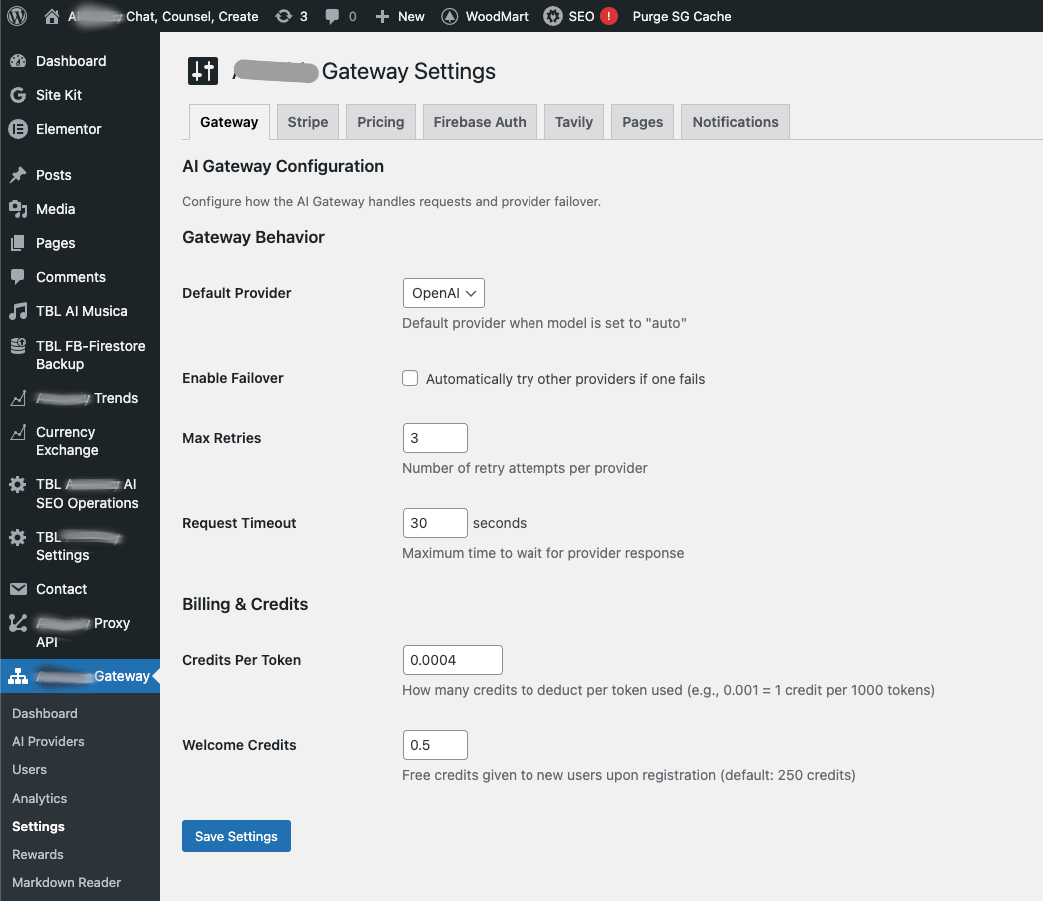
Multi-Provider AI Orchestration
Intelligently routes inference requests between OpenAI, Anthropic (Claude), and Google Gemini with Automatic Failover to ensure zero downtime for edge users.
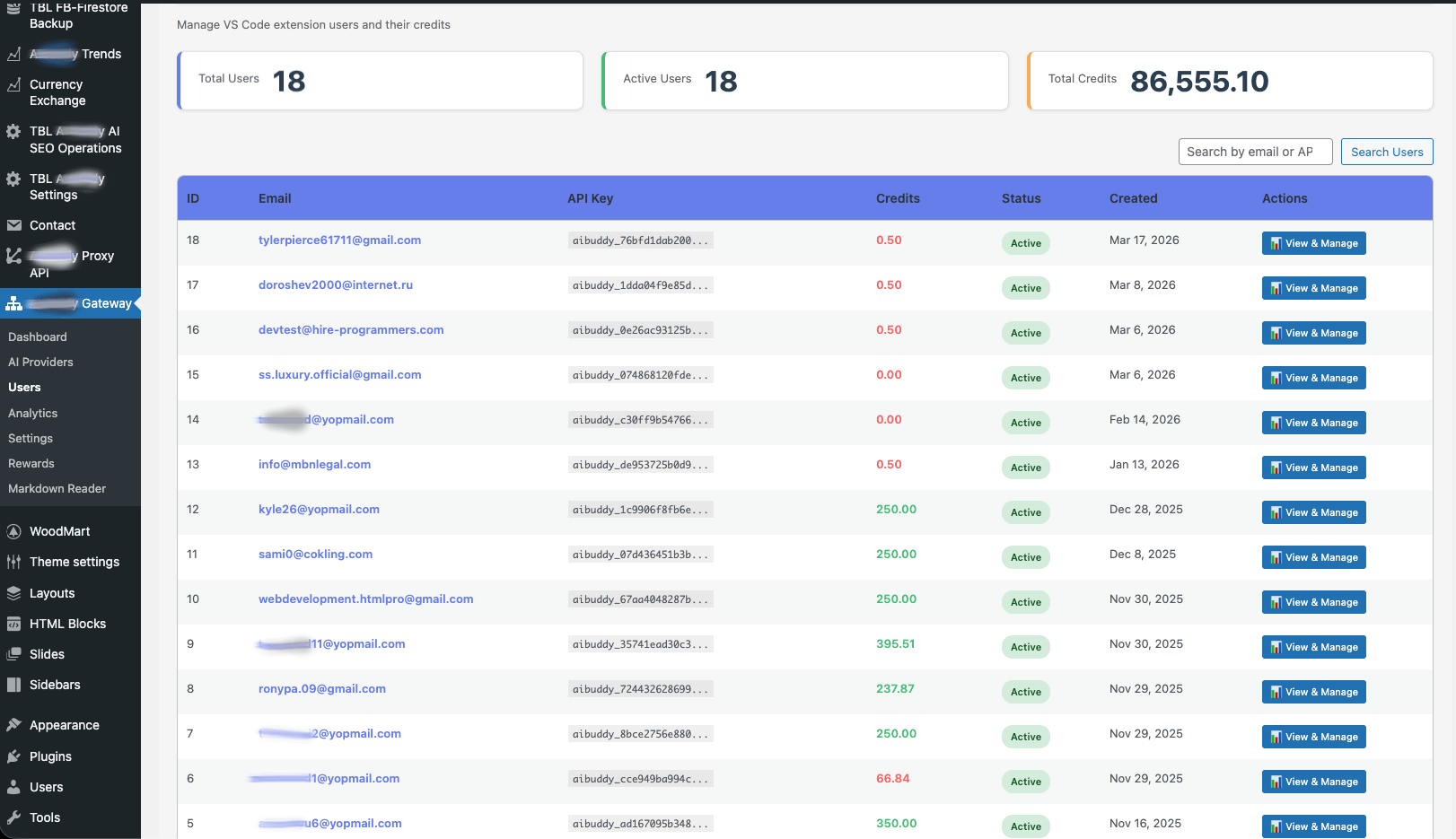
Credit Ledger & Pricing Engine
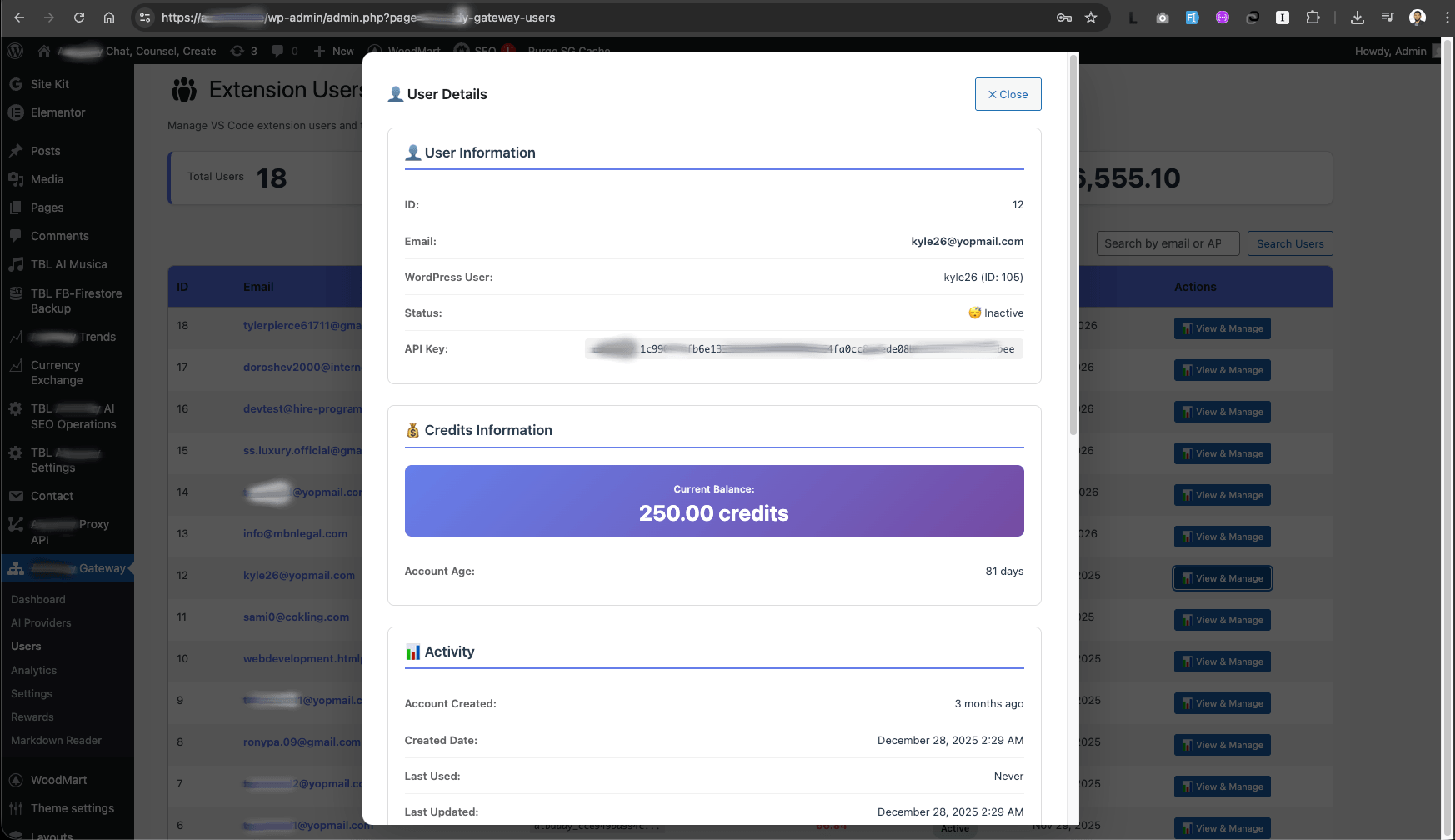
Universal currency system. Deducts credits with micro-cent precision based on Input/Output tokens, powered by a predictive algorithm to maintain high net margins.
Hybrid Authentication
Seamless passwordless social logins via Firebase (Google, Apple) mapped securely to native WordPress User IDs, combining modern auth with legacy DB stability.
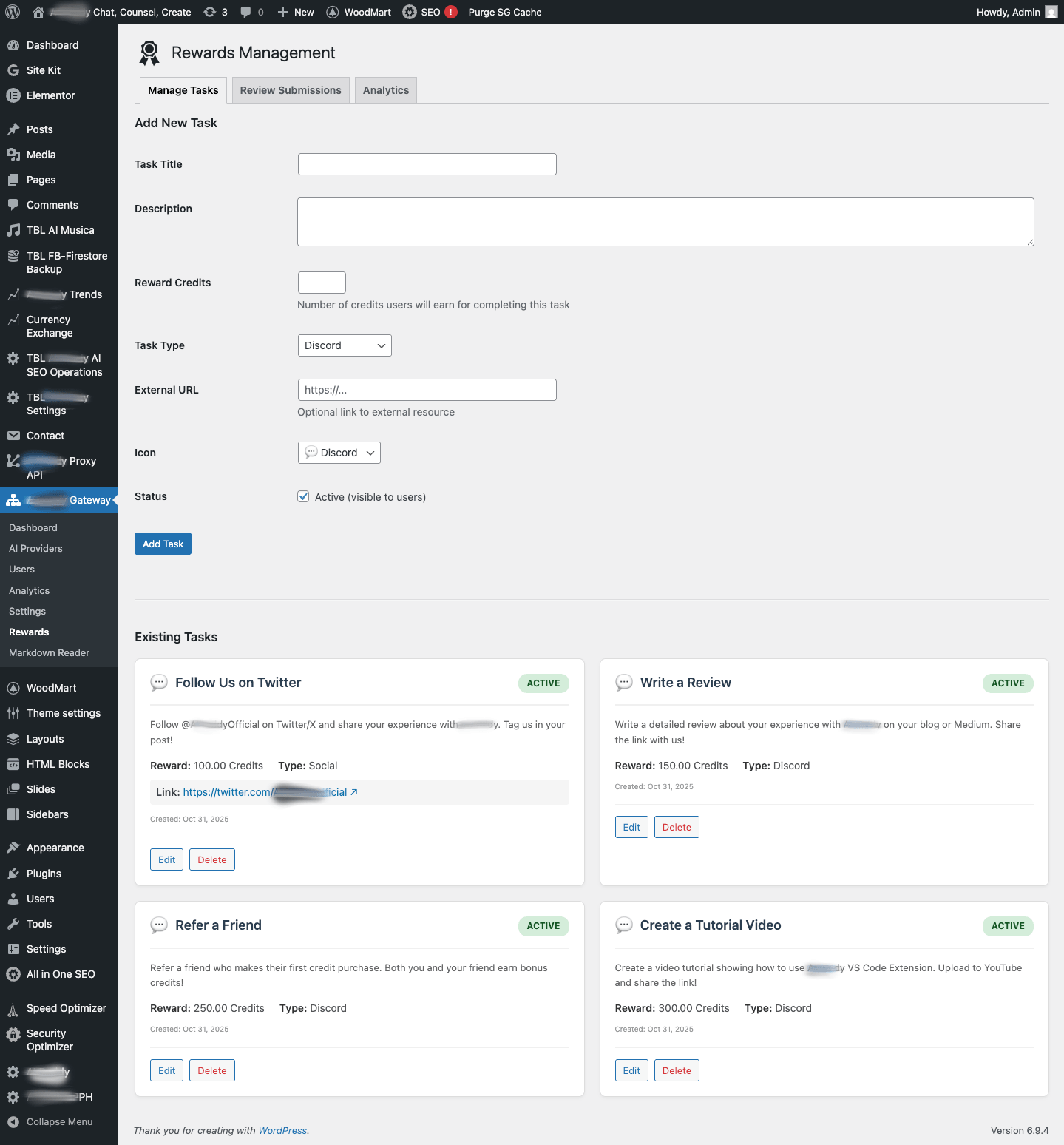
Gamified Rewards Engine
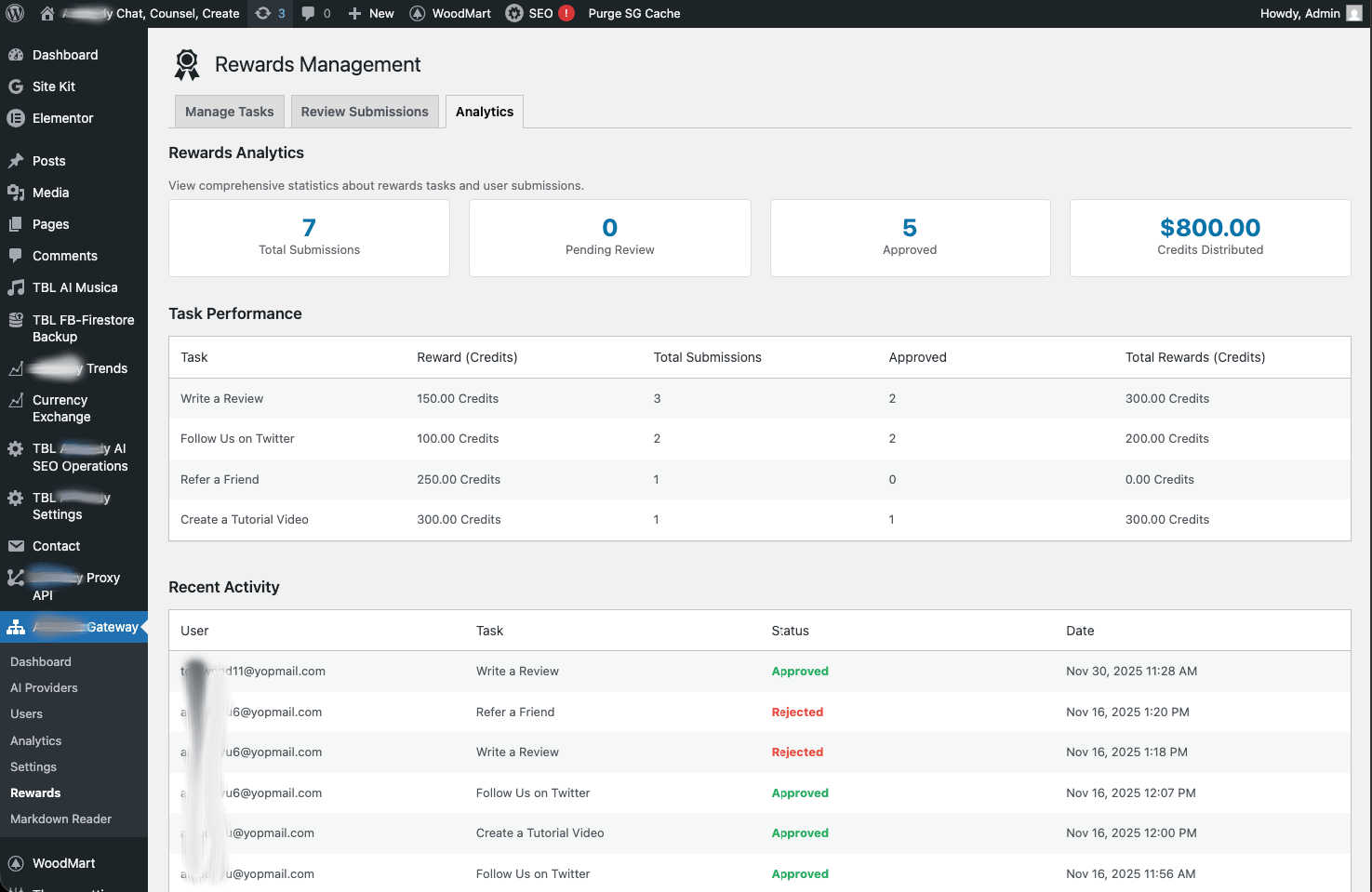
Built-in growth loop. Users complete verifiable social/content tasks (e.g. referrals) and the admin approves them to instantly inject free API credits into their wallets.
Stripe & Billing Automation
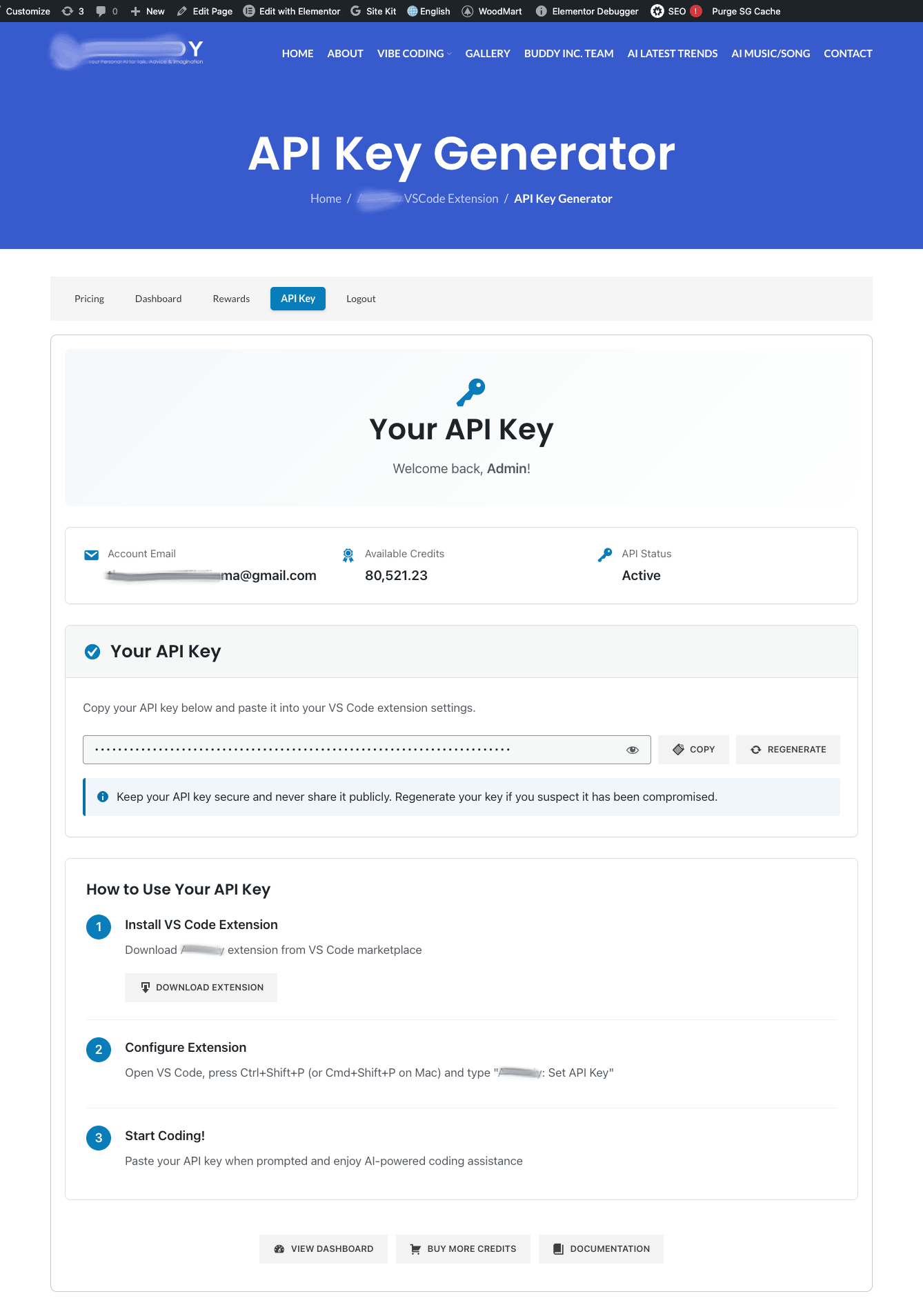
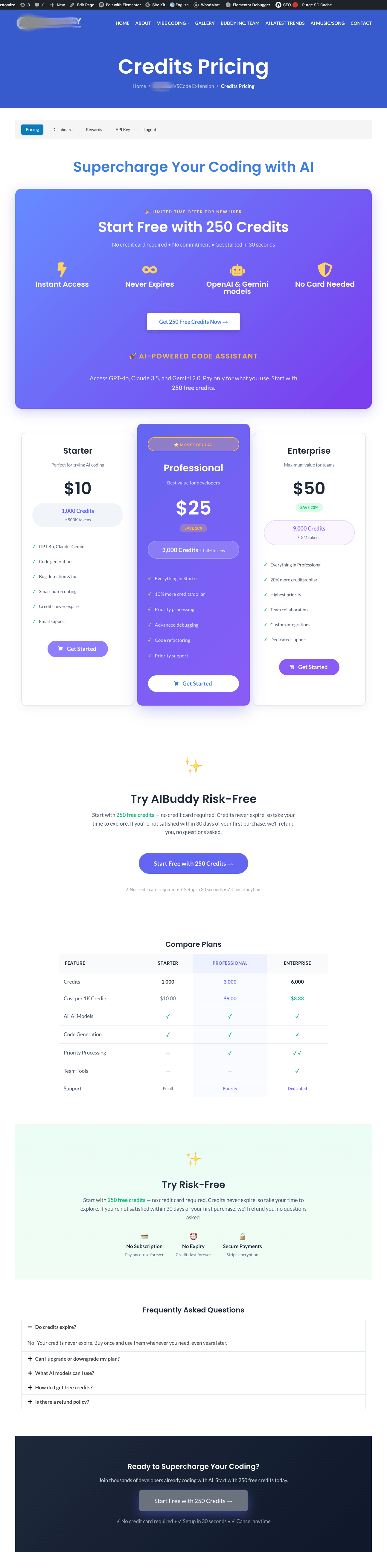
Completely hands-off checkout via native shortcodes. Secure Webhooks listen for tier level purchases and automatically balance user ledgers.
Enterprise Security & Serverless
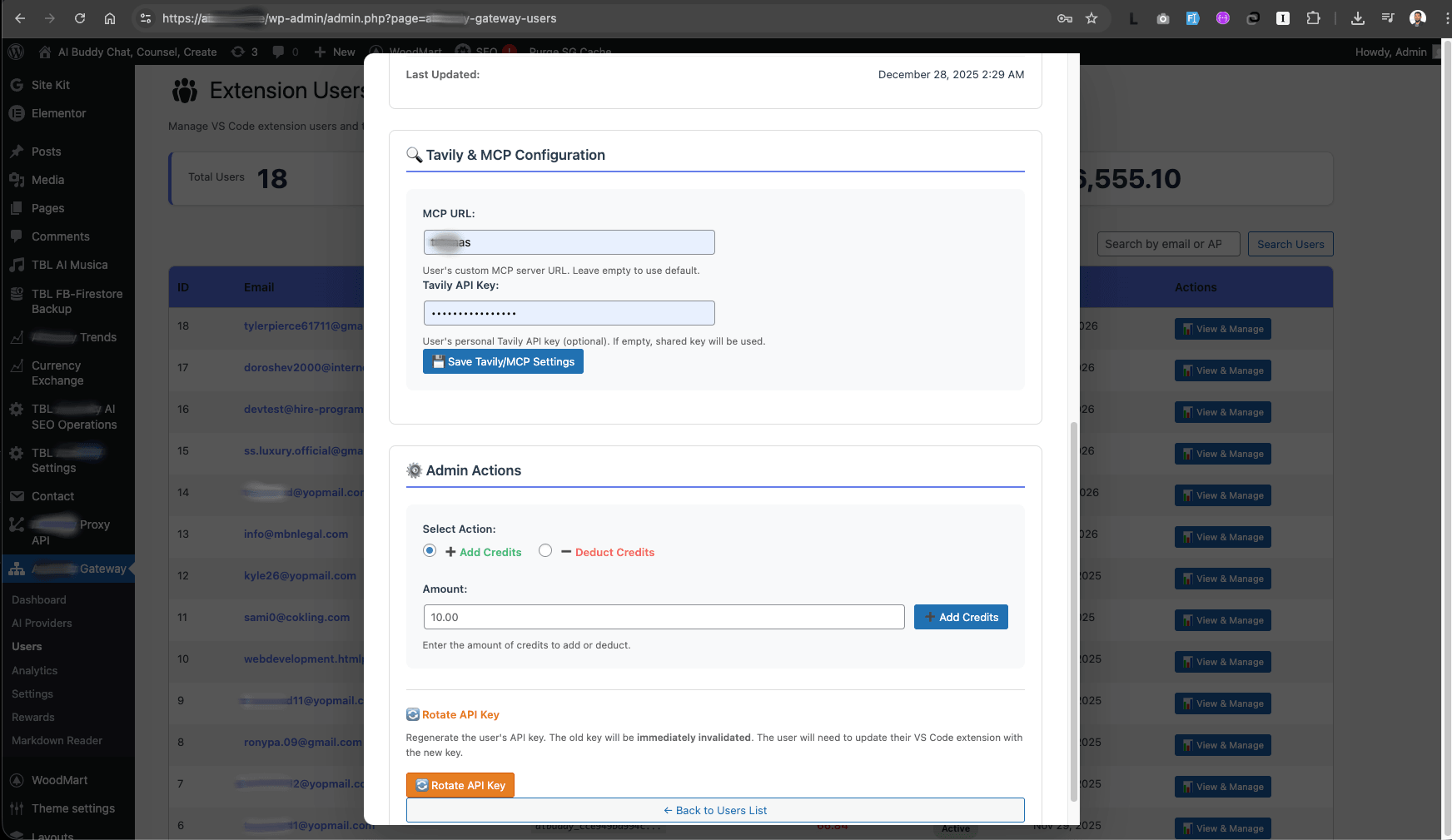
AES-256 encrypted API Keys. Supports Tavily AI Search (RAG), Model Context Protocol, and AWS Lambda integration to offload heavy handshakes.
Architectural Integrity
Built entirely with a modular, object-oriented approach for absolute reliability, security, and high-throughput endpoint responses bypassing standard WP meta bloat.
WordPress Backend
PHP 7.4+
Custom MySQL Schema
Firebase Auth
Stripe Webhooks
AES-256
REST API (/v2/)
Provider Manager
Standardizes connection protocols. If Anthropic goes down, seamlessly shifts traffic to OpenAI instantly.
Ledger & Pricing Analyzer
Decouples raw AI token costs from retail user Credits. Calculates fractional margins based on precise usage logs.
Relational DB Provisioning
Installs 7 custom relational MySQL tables on activation (`users`, `usage`, `transactions`, `tasks`, etc.) maximizing speed over `wp_postmeta`.
API Reference
Detailed REST API architecture powering the VS Code Extension. Built for performance, headless security, and precise cost tracking.
/inference
Core Capabilities
Primary endpoint intelligently routing prompts between OpenAI, Gemini, and Claude. Natively supports 7 distinct developer IDE commands including Code Generation, Refactoring, Auto-Documentation (JSDoc), Unit Testing, and Terminal Error Debugging.
Request Payload Architecture
{
  "api_key": "aes_encrypted_key",
  "model": "auto",
  "messages": [
    {
      "role": "user",
      "content": "Generate a React component with pagination..."
    }
  ],
  "max_tokens": 800
}
Error Handling & Testing Scenarios
- 401 Unauthorized: Invalid or revoked API key rejection.
- 402 Payment Required: Insufficient wallet credits returned with precise
required_creditsdelta. - 429 Too Many Requests: Automated rate-limiting with
retry_afterTTL.
Error Response Example
{
  "error": "Insufficient credits",
  "required_credits": 1.5,
  "available_credits": 0.14
}
The central AI engine. This single endpoint natively routes multi-LLM traffic across your preferred providers, natively powering 7 distinct IDE developer commands:
- Code Generation: Scaffold complete components.
- Code Explanation: Summarize complex legacy logic.
- Terminal Debugging: Find and automatically fix console errors.
- Refactoring: Modernize existing architecture.
- Documentation: Auto-generate strict JSDocs/PHPDocs.
- Unit Tests: Scaffold robust Jest/PHPUnit test suites.
- General Q&A: Programming logic assistance.
/tavily
RAG Web Exploration
Built-in web search billed cleanly via the user’s single API key. Supports basic Search (0.1 cr), Deep Research (0.5 cr), Conversational Chat (0.3 cr), and JSON schema Data Extraction (0.4 cr).
{
  "endpoint": "extract",
  "query": "Extract tech company info",
  "options": {
    "extraction_type": "structured",
    "schema": {
      "company_name": "string",
      "founding_year": "number"
    }
  }
}
An integrated Retrieval-Augmented Generation context hub. It supports 5 completely distinct research modes. Costs are fractionally calculated and billed safely via the user’s universal API key.
- Search: Basic web queries (Billed 0.1 cr/req).
- Research: Deep analytical scraping (Billed 0.5 cr/req).
- Chat: Conversational multi-turn context (Billed 0.3 cr/req).
- Extract: Enforces JSON schema structure (Billed 0.4 cr/req).
/usage-history
Paginated Token Audit Ledger
Extensive history pipeline offering pagination filtering, enabling precise token tracking and generating direct profit_usd metrics independently per request.
{
  "success": true,
  "total": 42,
  "items": [{
    "provider": "openai",
    "input_tokens": 600,
    "credits_deducted": 0.1234,
    "api_cost_usd": 0.001234,
    "profit_usd": 0.000456
  }]
}
An enterprise-grade ledger audit pipeline tracking the precise margin metric on every individual API call ever made. Allows the UI frontend to render paginated transaction history effortlessly.
- Exact real-time calculations matching tokens_used versus credits_deducted.
- Instantly generates an explicit profit_usd validation for every request.
- Highly filterable by specific date_range, provider, and status.
Transforming WordPress into a Headless SaaS Infrastructure
Developing front-end applications (like VS Code extensions) is only half the battle. This project solves the backend infrastructure challenge. Rather than exposing raw, unmetered AI endpoints to end-users, this Gateway acts as a secure intermediary layer. It manages user authentication, precise financial billing, and intelligent AI failover routing, ensuring the application remains profitable, stable, and highly scalable.
Under The Hood
Custom REST Namespace
Operates entirely via /wp-json/aibuddy-code/v2/, bypassing slow WP-Admin AJAX calls for highly performant, sub-second latency.
Relational Database Schema
Provisions 7 custom MySQL tables (e.g., wp_aibuddy_gateway_usage) handling massive log volumes without utilizing slow WordPress meta-data.
Front-end Modularity
Employs 11 custom Shortcodes and deep Elementor Integration, allowing site owners to rapidly deploy dashboards without writing front-end code.
Predictive Pricing Engine & Margins
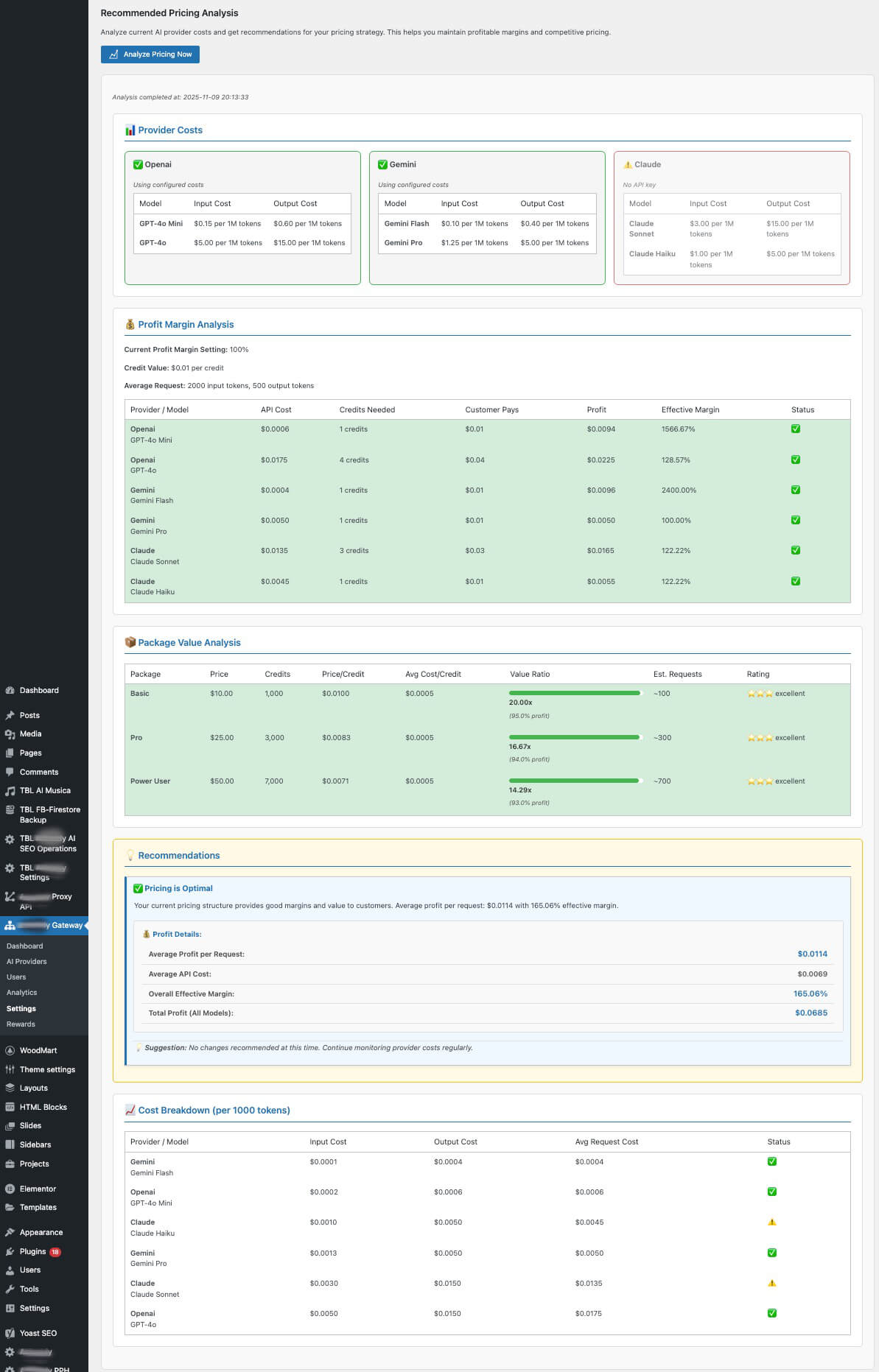
Because different AI models (like Claude Opus vs. Gemini) charge completely different internal rates based on token volume, rigid retail pricing quickly becomes unprofitable.
This system tracks every single token ingested and outputted. It then utilizes a predictive AI pricing algorithm to calculate the Raw Cost vs. Retail Value. If margins dip below optimal levels, the dashboard flags a “Low Rating”, ensuring continuous profitability.
- Real-time calculations of Input/Output tokens.
- Mathematical "Margin Rating" alerts across dynamic pricing tiers.
- Stripe Webhooks automatically deposit purchased credits directly into user wallets.
Gamified Rewards Engine
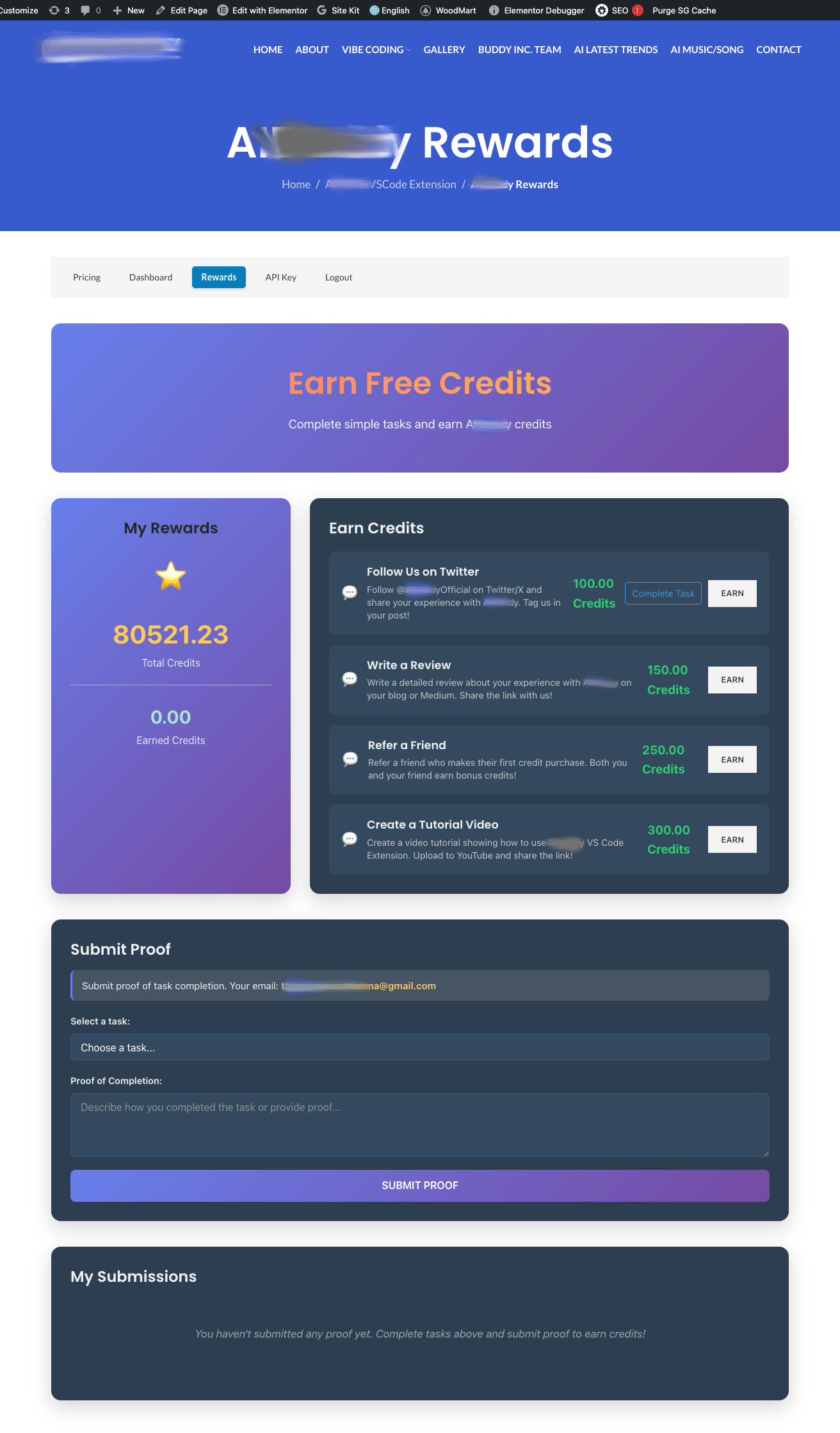
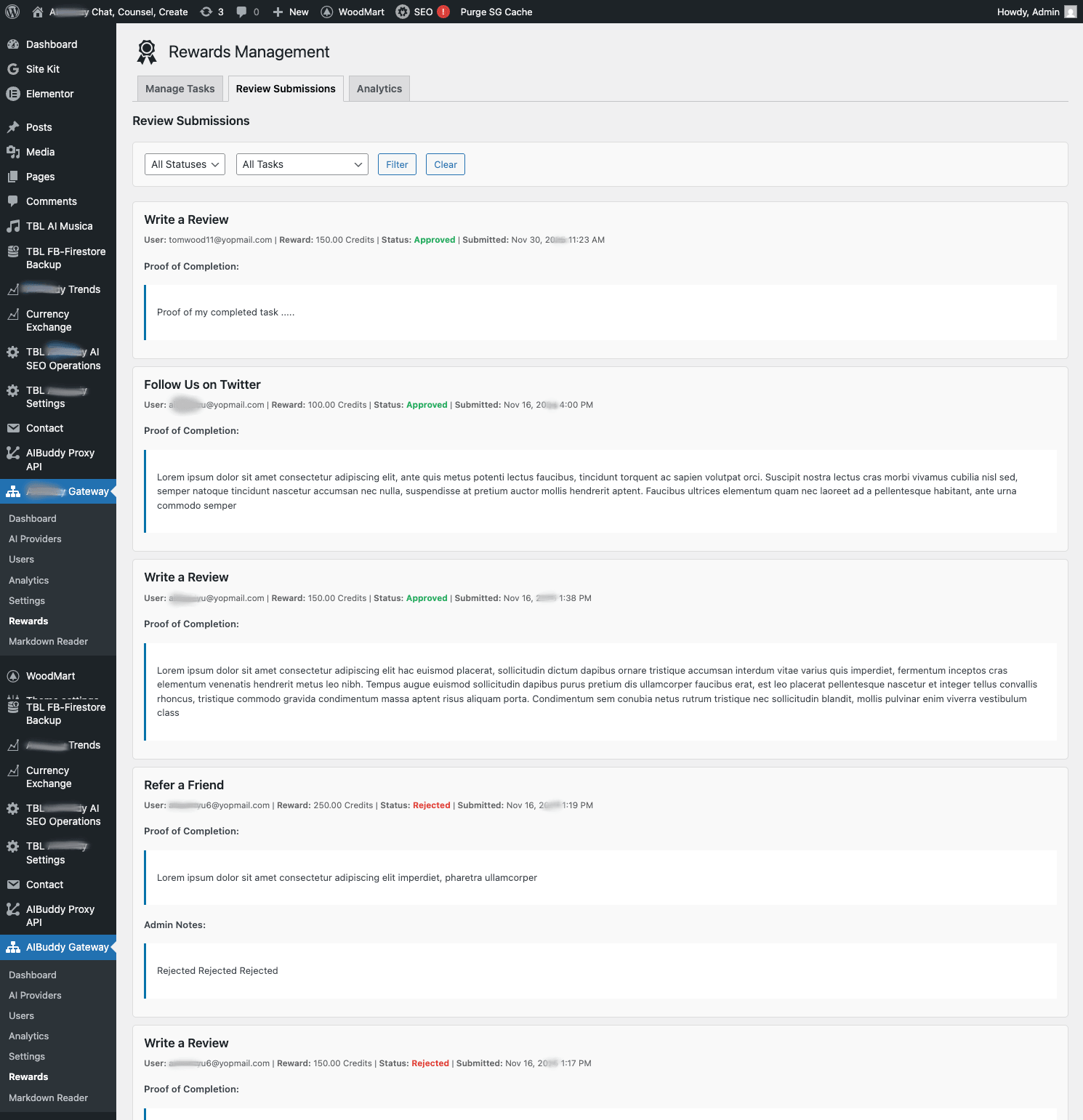
To reduce Customer Acquisition Cost (CAC) and encourage organic marketing, a native growth loop was engineered into the core platform.
Users can earn free inference credits by completing assigned tasks, such as creating a promotional TikTok or referring colleagues. Submissions are pooled in the backend where an administrator can audit the proof (e.g., URL verification) and instantly inject the credit bounty into the user’s ledger.
- Customizable admin task creation via custom database tables.
- Secure proof-of-completion upload endpoints.
- Instant ledger updates without manual DB intervention.
Hybrid Auth & AES Encryption
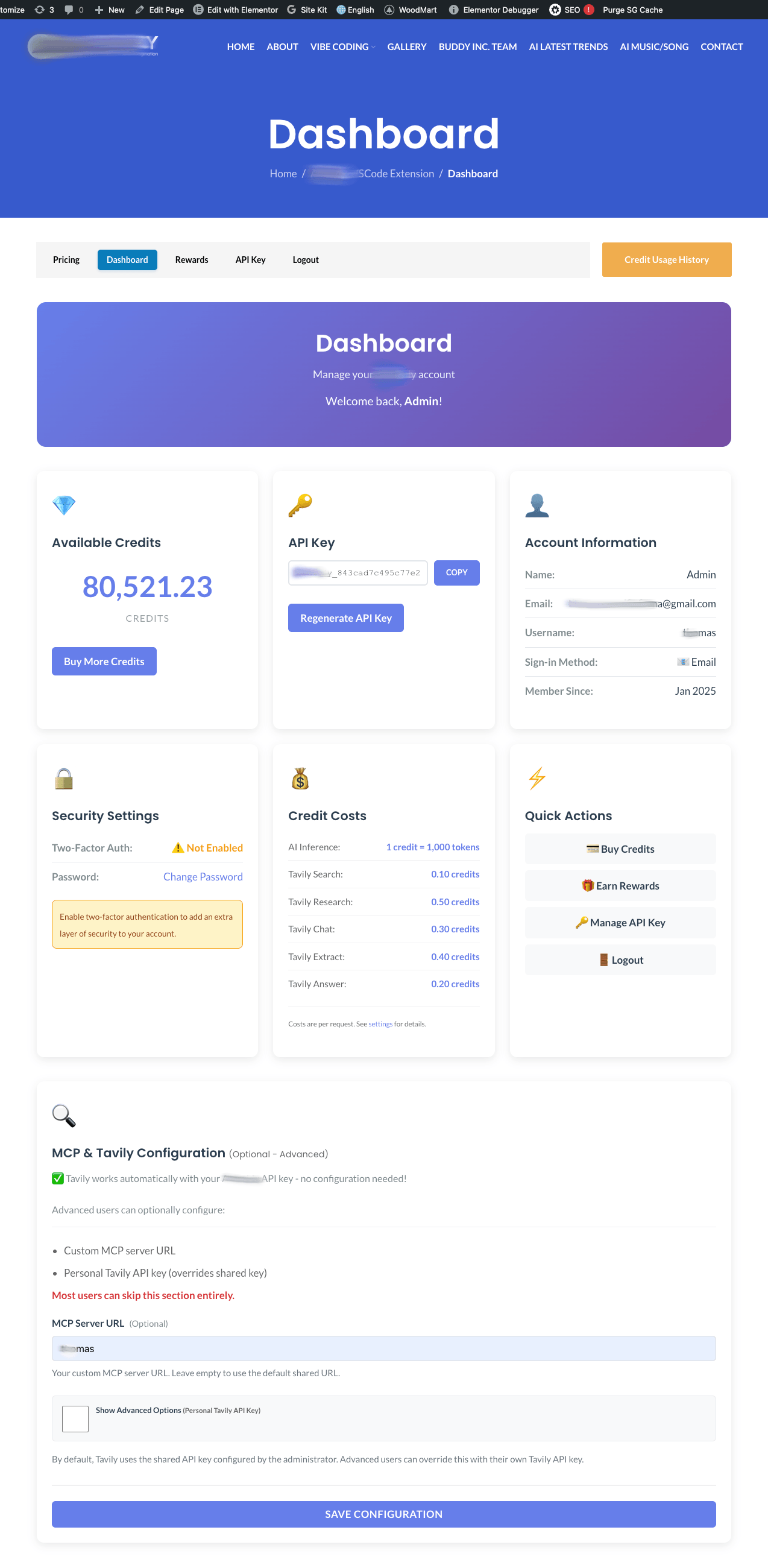
Bridging modern authentication with traditional user management. The platform offloads initial social registration friction to Google Firebase (supporting Google, Apple, and Phone OTP).
Once authenticated via Firebase, the backend provisions a native WordPress user mapping. Crucially, the system generates custom `/v2/` API keys for IDE integration—which are symmetrically encrypted using AES-256 before being stored in the database, preventing unauthorized exposure.
- Seamless, passwordless Firebase Social Login.
- Mathematical API Key creation mapped to custom `wp_users`.
- Optional AWS Lambda integration for serverless DDoS protection.